Blog
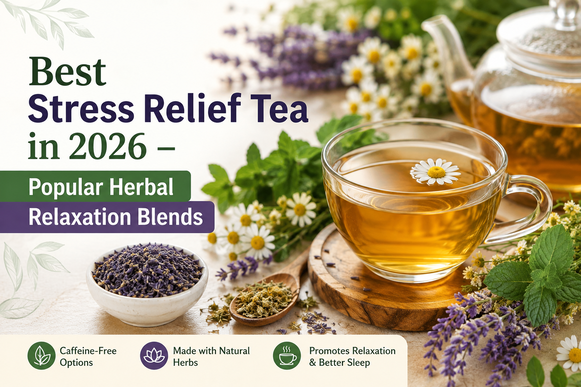
Best Stress Relief Tea in 2026 – Popular Herbal Relaxation Blends

Modern life can feel busy from morning to night. Work responsibilities, studies, and family commitments keep people rushing through the day. These pressures, plus screen time and everyday challenges, often leave little room to pause. People seek simple ways to slow down and regain balance.
Additionally, screen time and everyday challenges also make it hard to slow down. Many people seek simple ways to create a calmer routine. Herbal tea can fit into an evening or bedtime ritual. For many, the Best Stress Relief Tea in 2026 can offer a gentle, relaxing pause.
Unlike traditional teas made from Camellia sinensis, many herbal infusions are naturally caffeine-free and are prepared using flowers, leaves, roots, and other botanical. Popular choices include chamomile, lavender, lemon balm, peppermint, passionflower, and valerian.
This guide explores popular stress-relief and relaxation teas in 2026, what makes each one different, and how to choose a blend that suits your routine.
What Is Stress Relief Tea?
“Stress relief tea” is a general term used for herbal teas and botanical infusions that people enjoy as part of a calming routine. These beverages are not necessarily medical treatments for stress or anxiety. Instead, they can provide a soothing experience through their warmth, aroma, flavor, and traditional herbal ingredients.
Herbal infusions are particularly popular in the evening because many contain no caffeine. This makes them an alternative to caffeinated beverages when you want something warm and relaxing later in the day.
The best choice depends on your personal taste, preferred ingredients, caffeine sensitivity, and how you plan to incorporate tea into your daily routine.
How Can Herbal Tea Support Relaxation?
A cup of herbal tea can become more than just a beverage. Preparing and slowly drinking a warm infusion can create a useful pause during a busy day.
The experience may involve several relaxing elements: the warmth of the drink, the aroma of herbs, a short break from screens, and a consistent evening ritual. Some herbs are also traditionally associated with relaxation and nighttime routines.
However, herbal tea should be viewed as one part of a healthy lifestyle rather than a standalone solution for ongoing stress. Regular sleep, physical activity, balanced nutrition, time away from screens, and relaxation techniques can also contribute to overall well-being.
Best Stress Relief Teas in 2026
1. Chamomile Tea
Chamomile is one of the most recognizable herbal teas associated with relaxation. It has a mild, slightly sweet, floral flavor that many people find pleasant before bedtime.
Chamomile tea is naturally caffeine-free, making it a popular choice for evening consumption. It can be enjoyed on its own or combined with other herbs such as lavender or lemon balm.
If you prefer a gentle flavor and a simple herbal infusion, chamomile is a good starting point.
2. Lavender Tea
Lavender is known for its distinctive floral aroma and is commonly used in relaxation-focused herbal blends. Lavender tea has a more pronounced floral flavor than chamomile, so some people prefer it blended with milder ingredients.
A lavender and chamomile combination can create a fragrant evening beverage. Lavender can also be paired with lemon balm or other botanical to create a more complex flavor profile.
Because lavender has a strong aroma, a little can go a long way in a blend.
3. Lemon Balm Tea
Lemon balm offers a fresh, naturally citrus-like flavor. It is traditionally used in herbal preparations associated with calmness and relaxation.
Its refreshing taste makes it versatile enough for both daytime and evening use. Lemon balm can be combined with chamomile for a softer flavor or with other herbs when a brighter herbal profile is preferred.
For people who do not enjoy strongly floral teas, lemon balm can be an appealing alternative.
4. Peppermint Tea
Peppermint tea is a refreshing herbal infusion with a cool, minty flavor. It is naturally caffeine-free and can be enjoyed after meals or during an evening wind-down routine.
While peppermint is not typically considered a classic “sleep herb,” many people enjoy it because of its refreshing taste and aroma. It can also be blended with lemon balm, chamomile, or other herbs.
Peppermint is particularly suitable for people who prefer a crisp and refreshing tea rather than a floral one.
5. Passionflower Tea
Passionflower is another botanical commonly found in herbal relaxation blends. Its traditional use has made it a popular ingredient in teas designed for nighttime or calming routines.
Passionflower tea generally has a mild herbal taste and may be combined with ingredients such as chamomile, lemon balm, or other botanical.
If you are exploring multi-herb relaxation blends, passionflower is an ingredient you may come across frequently.
6. Valerian Root Tea
Valerian root has a long history of traditional use in herbal preparations intended for nighttime relaxation. Compared with chamomile or peppermint, valerian has a stronger and more earthy flavor.
Because of its distinctive taste, valerian is often included as part of a multi-herb formulation rather than consumed alone.
Anyone considering valerian or concentrated herbal products should pay particular attention to the ingredient information and recommended serving instructions.
7. Ashwagandha Herbal Tea
Ashwagandha is a botanical that has become increasingly popular in modern wellness products. It is commonly included in herbal blends designed around relaxation and stress-management routines.
Its flavor can be earthy and distinctive, which is why it is often combined with other ingredients to create a more balanced taste.
As with any botanical ingredient, it is important to check the product label and consider potential interactions before adding it to your regular routine.
A Popular Herbal Option for a Relaxing Evening
One example of a product designed around an evening herbal routine is Tea Mill Sleep Herbal Infusion.
This type of herbal infusion can be incorporated into a nighttime wind-down ritual, particularly for people who enjoy preparing a warm beverage before bed. When choosing a sleep-oriented herbal tea, look at the complete ingredient list, serving instructions, flavor profile, and whether the blend fits your personal preferences.
Rather than relying on a single ingredient, herbal infusions may combine multiple botanical to create a balanced flavor and overall tea experience.
For the best experience, prepare the infusion according to the product’s directions and enjoy it as part of a consistent, screen-free relaxation routine.
How to Choose the Best Stress Relief Tea
With so many herbal teas available, choosing the right one can seem confusing. Start with the following factors.
Check the Ingredients
Look at the complete ingredient list rather than relying only on the product name. This helps you understand exactly what you are drinking and identify ingredients you may want to avoid.
Consider Caffeine Content
If you are drinking tea in the evening, check whether it contains caffeine. Many herbal infusions are naturally caffeine-free, while green, black, white, and some specialty teas contain caffeine.
Choose a Flavor You Enjoy
A relaxing routine works better when you actually enjoy the beverage. Floral flavors may appeal to chamomile and lavender fans, while peppermint and lemon balm provide fresher profiles.
Look at the Tea Format
Tea bags are convenient and easy to prepare, while loose-leaf products can provide more flexibility in brewing. Choose whichever format fits your routine.
Avoid Unnecessary Additives
Check for added sugar, artificial flavors, or other ingredients you may not want. A simple ingredient list can make it easier to understand what is in your tea.
When Is the Best Time to Drink Stress Relief Tea?
There is no single perfect time for everyone.
Morning tea can become part of a mindful start to the day, while afternoon tea can provide a short break from work or study. Evening is especially popular for caffeine-free herbal infusions because they can become part of a relaxing wind-down ritual.
If you are sensitive to caffeine, choosing a caffeine-free herbal infusion later in the day may be preferable to drinking caffeinated tea.
How to Prepare Herbal Tea for Relaxation
Preparing tea can itself become part of your relaxation routine.
- Choose an herbal blend that suits your taste.
- Heat fresh water according to the product instructions.
- Allow the tea to steep for the recommended time.
- Let it cool to a comfortable drinking temperature.
- Drink it slowly rather than rushing through the cup.
- Consider pairing your tea with quiet activities such as reading, gentle stretching, or breathing exercises.
Creating a consistent routine can make your evening feel more intentional and less rushed.
Stress Relief Tea vs. Regular Tea
The biggest difference between herbal infusions and traditional teas is their ingredients.
Traditional black and green teas are made from tea leaves and naturally contain caffeine. Herbal infusions are generally made from other plants, flowers, leaves, roots, or spices and are often caffeine-free.
Herbal teas are therefore commonly chosen for evening routines, while caffeinated teas may be preferred earlier in the day.
However, not every herbal blend is automatically caffeine-free, so checking the label is always a good idea.
Are Stress Relief Teas Safe?
Herbal does not automatically mean suitable for everyone. Different botanical can have different effects and may interact with certain medications.
Always read the product label and follow the recommended serving instructions. If you are pregnant or breastfeeding, take prescription medication, have an existing medical condition, or are unsure whether a particular herb is suitable for you, consult a qualified healthcare professional before using it regularly.
It is also important to remember that persistent or severe stress, anxiety, or sleep problems deserve appropriate professional attention. Herbal tea can be part of a relaxing lifestyle but should not replace professional care when it is needed.
Final Thoughts
Herbal tea can be a simple way to create a more intentional relaxation routine. From gentle chamomile and fragrant lavender to refreshing peppermint and citrusy lemon balm, there are plenty of options to explore in 2026.
When choosing a stress-relief tea, focus on the ingredients, caffeine content, flavor, preparation method, and your individual preferences. Most importantly, think of tea as one small part of a broader approach to relaxation and well-being.
For people looking to add an herbal infusion to their evening routine, Tea Mill offers an option worth considering alongside other caffeine-free relaxation blends.
Frequently Asked Questions
What is the best tea for stress relief?
There is no single best tea for everyone. Chamomile, lavender, lemon balm, peppermint, passionflower, and other herbal infusions are popular choices. The best option depends on flavor preference, ingredients, caffeine content, and individual needs.
Which herbal tea is best for relaxation at night?
Caffeine-free options such as chamomile and lavender are commonly chosen for evening routines. Multi-herb nighttime blends are another popular option.
Is chamomile tea good for relaxation?
Chamomile is traditionally associated with calming and nighttime routines and is one of the most popular caffeine-free herbal teas.
Can you drink stress relief tea every day?
Many people enjoy herbal tea regularly, but suitability depends on the ingredients. Check the label and consider professional advice if you take medications or have specific health concerns.
Does stress relief tea contain caffeine?
Many herbal infusions are naturally caffeine-free, but it depends on the ingredients. Always check the product label.
What tea is best before bedtime?
A caffeine-free herbal infusion is generally more suitable for bedtime than a caffeinated tea. Chamomile, lavender, and specially formulated nighttime blends are common choices.