Blog
From Farm to Cup: Why You Should Buy Organic Tea

Tea is more than just a refreshing beverage. For many people, it is an essential part of their morning routine, afternoon break, or evening relaxation. As consumers become more interested in where their food and drinks come from, organic tea is gaining attention for its farming standards, natural flavors, and connection to responsible agricultural practices.
If you are planning to buy organic tea, understanding how it is grown, processed, and packaged can help you make an informed decision. From carefully managed tea gardens to the final brewing process, every stage contributes to the quality and character of the tea in your cup.
In this guide, we will explore what organic tea means, how it travels from farm to cup, its potential advantages, and what to consider when choosing the right tea for your daily routine.
What Is Organic Tea?
Organic tea is tea produced according to organic farming standards and applicable certification requirements. These standards generally restrict the use of synthetic pesticides and fertilizers and establish rules for soil management, production, processing, and labeling.
Unlike conventional tea production, certified organic farming emphasizes approved agricultural inputs and farming practices designed to support soil health and ecological balance.
How Organic Tea Differs from Conventional Tea
The main difference lies in the farming and production standards followed. Organic tea producers must comply with the requirements of the relevant organic certification system, while conventional producers follow the agricultural regulations applicable to their operations.
However, organic certification does not automatically mean that tea is pesticide-free, healthier, or better tasting. Flavor and quality depend on several factors, including the tea variety, growing environment, harvesting, and processing methods.
What Organic Certification Means
Certification provides consumers with a way to verify whether a product meets a particular organic standard. When shopping for organic tea in India, check the packaging for applicable certification details and verify the claim where possible.
Reading labels carefully helps you distinguish certified organic products from products described only as natural or traditionally grown.
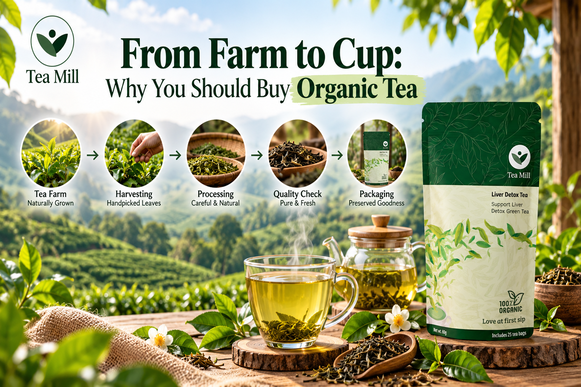
From Farm to Cup: How Organic Tea Is Produced
Step 1: Growing Tea Plants Using Organic Farming Practices
The journey begins in tea gardens, where tea plants grow under suitable soil and climatic conditions. Organic farming practices may include composting, crop management, soil conservation, and approved methods of controlling pests.
These practices aim to maintain soil fertility while managing the tea plantation in accordance with organic standards. The climate, altitude, rainfall, and soil conditions also influence the leaves’ flavor and aroma.
Step 2: Harvesting Fresh Tea Leaves
Tea harvesting involves selecting and collecting suitable leaves from the tea plants. Depending on the tea variety and desired quality, producers may harvest young shoots or different combinations of leaves.
Careful harvesting helps maintain consistency and provides suitable raw material for the next stage. Harvest timing and leaf quality can influence the final flavor of the tea.
Step 3: Processing and Drying the Leaves
After harvesting, tea leaves undergo processing according to the type of tea being produced. Green tea is generally processed to limit oxidation, while black tea undergoes extensive oxidation to develop its characteristic color and flavor.
White tea typically involves minimal processing, while other varieties may require specialized methods. Drying helps reduce moisture and prepare the leaves for storage and packaging.
Step 4: Quality Checks, Packaging, and Storage
Before reaching consumers, tea may undergo checks for appearance, aroma, moisture, consistency, and other quality requirements. Certified organic products must also meet applicable handling and processing requirements to maintain their certification status.
Suitable packaging helps protect tea from moisture, air, light, and strong odors. Proper storage preserves its freshness and helps maintain its intended flavor.
Step 5: Brewing Organic Tea at Home
The final stage takes place in your kitchen. Use fresh, clean water and follow the brewing instructions recommended for your chosen tea. Correct water temperature and steeping time can make a noticeable difference in taste.
A well-prepared cup allows you to appreciate the tea’s natural character, whether you prefer a light green tea or a full-bodied black tea.
7 Reasons Why You Should Buy Organic Tea
1. Support Responsible Farming Practices
Organic farming standards encourage producers to follow specific rules regarding agricultural inputs, soil management, and production methods. Choosing certified organic tea can support producers who operate within these standards.
2. Enjoy the Natural Flavors of Tea
Tea flavor depends on the plant variety, growing conditions, harvest, and processing. Organic tea can offer a wide range of flavor profiles, from fresh and grassy green tea to rich and malty black tea.
The best choice depends on your personal taste rather than the organic label alone.
3. Make an Informed Choice About Agricultural Residues
Organic standards restrict many synthetic pesticides and specify which agricultural inputs are permitted. This can be an important consideration for shoppers interested in how their tea is produced.
However, organic certification does not guarantee zero pesticide residues. If this matters to you, look for transparent product information and relevant testing or certification details.
4. Encourage Soil Health and Biodiversity
Depending on how a farm is managed, organic practices can include composting, cover crops, and other soil-management techniques. These approaches may help improve soil structure, support soil organisms, and contribute to biodiversity.
Actual environmental outcomes depend on the farm’s location, management practices, and wider ecosystem.
5. Explore Different Tea Varieties
Buying organic tea gives you an opportunity to explore different flavors and preparation styles.
- Organic green tea: Often light, fresh, and grassy.
- Organic black tea: Usually fuller-bodied with malty or robust notes.
- Organic white tea: Often delicate and subtle in flavor.
- Organic herbal infusions: May feature ingredients such as tulsi, ginger, or chamomile.
Check the product label to confirm whether a tea is certified organic and whether it contains pure tea leaves or a blend of ingredients.
6. Support Traceability and Transparent Sourcing
Knowing where your tea comes from can help you make a more informed purchase. Look for clear ingredient lists, origin information where available, certification details, and responsible packaging practices.
Transparent sourcing makes it easier to understand what you are buying and compare products from different sellers.
7. Choose Tea That Fits Your Lifestyle
Organic tea can be part of a balanced daily routine. You might prefer green tea in the morning, black tea during a break, or a caffeine-free herbal infusion in the evening.
Remember that green and black teas naturally contain caffeine, while pure herbal infusions are generally caffeine-free. Blended products can differ, so always check the ingredients.
Organic Tea vs. Conventional Tea: What Is the Difference?
Organic and conventional teas can both be enjoyable, high-quality beverages. The key differences relate primarily to farming standards and production practices.
| Feature | Organic Tea | Conventional Tea |
|---|---|---|
| Farming standards | Follows applicable organic requirements | Follows applicable conventional agricultural regulations |
| Agricultural inputs | Restricted to permitted inputs under the relevant standard | May use inputs permitted under applicable regulations |
| Certification | Certified products must meet the relevant standard | Organic certification is not required |
| Flavor | Depends on variety, growing conditions, and processing | Depends on variety, growing conditions, and processing |
| Price | May cost more due to production and certification costs | Varies by product and producer |
| Environmental impact | May support certain soil and biodiversity practices | Depends on farming and management methods |
Neither category automatically guarantees superior taste or health benefits. Compare product quality, sourcing, price, and certification before deciding.
How to Choose the Best Organic Tea
Before you buy organic tea online or in a store, keep these points in mind:
- Check certification: Look for applicable organic certification details rather than relying only on marketing claims.
- Read the ingredients: Make sure the product contains the tea or herbs you want.
- Consider freshness: Review packing dates and storage instructions where available.
- Understand the flavor: Choose a variety that matches your taste preferences.
- Compare value: Consider the quantity, quality, sourcing information, and price.
- Choose reliable sellers: Prefer sellers who provide clear product descriptions and customer support.
These simple checks can help you find a product that fits your expectations and budget.
How to Brew Organic Tea for the Best Flavor
A few basic techniques can improve your tea-drinking experience.
First, use fresh, clean water. Follow the recommended water temperature and steeping time for the tea variety, as green tea may require cooler water than black tea.
Measure the leaves according to the package instructions and avoid over-steeping if you prefer a smoother taste. Store unused tea in a tightly sealed container away from moisture, heat, direct sunlight, and strong odors.
You can enjoy your tea plain or add lemon or milk depending on the variety and your preferences. Limiting added sugar is a simple way to keep your regular tea routine balanced.
Conclusion
From the tea garden to your cup, every stage of tea production contributes to its final character. Organic farming standards, careful harvesting, suitable processing, and proper storage all play a role in how tea is produced and enjoyed.
When you buy organic tea, look beyond the label. Consider certification, sourcing, freshness, flavor, and value to choose a product that suits your preferences.
At Tea Mill, you can explore available tea varieties and discover flavors that fit your daily routine. Choose thoughtfully, brew carefully, and enjoy every cup as part of your tea-drinking experience.
Frequently Asked Questions (FAQs)
What is the difference between organic and regular tea?
Organic tea is produced according to applicable organic farming and processing standards. Conventional tea follows the regulations governing conventional production. The difference does not automatically determine taste or nutritional value.
Is organic tea worth buying?
Organic tea may be worth considering if certified production standards, farming practices, and sourcing information matter to you. Compare certification, quality, flavor, and price before purchasing.
Does organic tea contain pesticides?
Organic certification restricts many synthetic pesticides, but it does not guarantee zero residues. Environmental contamination and other factors can affect residue levels.
Is organic tea healthier than conventional tea?
There is insufficient evidence to conclude that organic tea is always healthier than conventional tea. Both can be enjoyed as part of a balanced diet.
How can I identify certified organic tea?
Check the package for applicable certification marks, certification details, and product information. In India, look for relevant organic certification under the applicable national requirements.
Where can I buy organic tea online in India?
You can explore specialist tea retailers and online stores that provide clear ingredient, sourcing, and certification information. Before buying, check the product description to confirm that the particular tea meets your requirements.