Blog
Does Tulsi Green Tea Help with Bloating & Digestion?

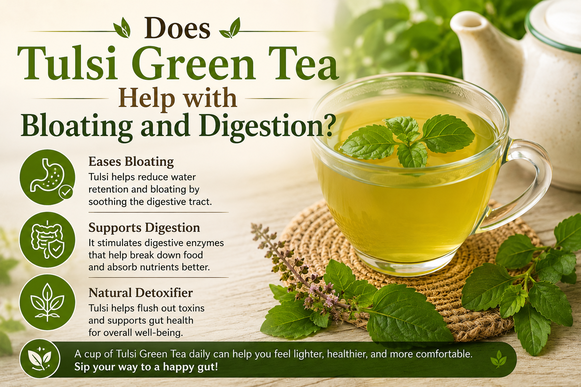
We’ve all been there: that uncomfortable, heavy, tight feeling in your stomach after a meal. Bloating is one of the most common digestive complaints, affecting millions of people daily. While over-the-counter antacids might offer temporary relief, many people are turning to natural, holistic remedies to soothe their gut. Enter the ancient wisdom of Ayurveda combined with the modern wellness staple: Tulsi Green Tea. But does it actually work? Can a simple cup of tea really soothe an upset stomach, reduce gas, and prevent bloating?
In this comprehensive guide, we will explore the science and traditional wisdom behind why Tulsi Green Tea is considered one of the best natural remedies for digestive health. We will break down how Tulsi (Holy Basil) and Green Tea work individually, how they become a powerhouse when combined, and the best way to incorporate them into your daily wellness routine.
Understanding the Root Causes of Bloating
Before we dive into the cure, it helps to understand the cause. Bloating is essentially a buildup of gas in the stomach and intestines. This can happen for several reasons:
- Poor Digestion: When your digestive system is sluggish, food sits in your stomach longer, fermenting and producing excess gas.
- Stress and Anxiety: The gut and brain are deeply connected. High stress levels increase cortisol, which can slow down digestion and cause spasms.
- Inflammation: Eating highly processed foods can cause inflammation in the gastrointestinal tract lining.
- Water Retention: Sometimes what feels like gas is actually your body holding onto excess water.
What is Tulsi Green Tea?
Tulsi Green Tea is a therapeutic blend of two of the world’s most revered botanicals.
First, we have Green Tea, globally celebrated for its high concentration of antioxidants and metabolism-boosting properties.
Second, we have Tulsi (Holy Basil), a cornerstone of Ayurvedic medicine for over 5,000 years. Premium blends, like the Tea Mill Tulsi Green Tea, utilize a combination of Rama, Krishna, and Vana Tulsi to maximize the therapeutic profile.
How Tulsi (Holy Basil) Relieves Bloating
1. Carminative Properties
Tulsi contains essential oils like eugenol, camphene, and cineole. These volatile oils have strong carminative properties that help break down gas bubbles trapped in the stomach, providing rapid relief.
2. Anti-Spasmodic Effects
Tulsi acts as a natural anti-spasmodic, relaxing the smooth muscles of the digestive tract, allowing trapped gas to move smoothly and painlessly.
3. Lowering Stress-Induced Gut Issues
Because Tulsi is an adaptogen, it lowers cortisol levels, calming the nervous system and preventing the “fight or flight” response from shutting down your digestion.
How Green Tea Aids the Digestive System
1. High in EGCG (Anti-Inflammatory)
The antioxidants in green tea (EGCG) help soothe the stomach lining, reducing swelling and discomfort caused by inflammation.
2. Boosts Metabolism
Green tea increases thermogenesis, meaning food moves through your digestive tract at a healthier, more efficient pace.
The Synergistic Magic: Why the Blend Works Best
While Green tea provides metabolic stimulation, Tulsi provides calming, anti-gas properties to ensure the movement is comfortable. The earthy flavor of Tulsi perfectly balances the grassy notes of green tea.
For an even deeper cleanse, many alternate between a daily Tulsi blend and a dedicated detox blend, such as Tea Mill’s Detox Green Tea.
How and When to Drink Tulsi Green Tea
The Best Time: The absolute best time to drink Tulsi Green Tea is 30 to 45 minutes after a heavy meal.
Brewing: Never use boiling water. Heat water to 80°C – 85°C, steep one tea bag for exactly 3 to 4 minutes.
Other Health Benefits
- Immunity Boost: Fights off seasonal colds and infections.
- Respiratory Health: Warm Tulsi vapor helps clear congestion.
For a complete 24-hour wellness routine, end your day with our caffeine-free Sleep Herbal Infusion.
Conclusion
So, does Tulsi Green Tea actually help with bloating and digestion? The answer is a definitive yes. By seamlessly combining the stress-relieving and anti-spasmodic powers of Ayurvedic Holy Basil with the metabolism-boosting and anti-inflammatory benefits of Green Tea, you get a completely natural, highly effective remedy for an upset stomach. When you drink this soothing blend after a heavy meal, it actively reduces the buildup of trapped gas, lowers cortisol levels that can hinder digestion, and gently stimulates your digestive tract to work more efficiently. Instead of constantly reaching for artificial antacids or suffering through uncomfortable post-meal heaviness, it’s time to embrace a holistic approach. Make the switch to Tea Mill premium Tulsi Green Tea today, and enjoy a bloat-free digestive system.
Frequently Asked Questions (FAQs)
1. Can I drink Tulsi Green Tea on an empty stomach?
If you have a sensitive gut, it is best to drink it after breakfast or 30 minutes after your meals for optimal digestion.
2. How many cups should I drink a day for bloating?
Drinking 2 to 3 cups a day is generally considered safe and effective.
3. Does Tulsi Green Tea contain caffeine?
Yes, it contains a mild amount of caffeine from the green tea, but significantly less than coffee.