
Blog
Green Tea vs Matcha: Which Is Better for Your Health?

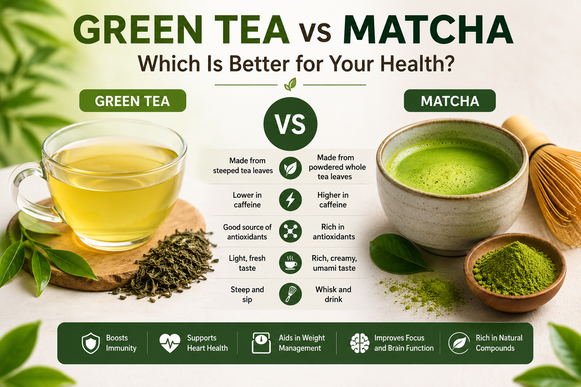
If you’re trying to choose between green tea and matcha, you’re not alone. Both are popular beverages known for their impressive health benefits, refreshing taste, and rich antioxidant content. While they come from the same plant, Camellia sinensis, they differ in how they’re grown, processed, prepared, and consumed. So, which is better for your health green tea or matcha? The answer depends on your health goals, lifestyle, and personal preferences. In this guide, we’ll compare green tea and matcha in terms of nutrition, antioxidants, caffeine, health benefits, taste, and more, helping you decide which tea deserves a place in your daily routine.
What Is Green Tea?
Green tea is made from the leaves of the Camellia sinensis plant. Unlike black tea, the leaves are quickly steamed or pan-fired after harvesting to prevent oxidation. This process helps preserve their natural green color and many beneficial compounds. Green tea is brewed by steeping loose leaves or tea bags in hot water for a few minutes. The resulting drink is light, refreshing, and packed with antioxidants.
Key Features of Green Tea
- Made from minimally processed tea leaves
- Mild, fresh, and slightly grassy flavor
- Lower caffeine content
- Rich in antioxidants and polyphenols
- Easy to prepare and suitable for daily consumption
What Is Matcha?
Matcha is a finely ground powder made from specially grown green tea leaves. Before harvest, the tea plants are shaded for several weeks, increasing chlorophyll levels and amino acid content. Unlike regular green tea, where the leaves are discarded after brewing, matcha involves consuming the entire powdered leaf mixed with water. This provides a more concentrated source of nutrients and antioxidants.
Key Features of Matcha
- Finely powdered whole tea leaves
- Vibrant green color
- Rich, creamy, and slightly sweet taste with umami notes
- Higher caffeine content than green tea
- Concentrated source of antioxidants
Green Tea vs Matcha: Key Differences
| Feature | Green Tea | Matcha |
| Source | Tea leaves | Powdered whole tea leaves |
| Preparation | Steeped in hot water | Whisked into water |
| Caffeine | Lower | Higher |
| Antioxidants | High | Very High |
| Taste | Light and refreshing | Rich, creamy, earthy |
| Chlorophyll | Moderate | High |
| L-Theanine | Good | Higher |
Which Has More Antioxidants?
Both green tea and matcha are excellent sources of antioxidants, particularly catechins such as EGCG (Epigallocatechin Gallate), which help protect the body against oxidative stress. However, matcha generally contains significantly higher antioxidant levels because you consume the entire tea leaf rather than simply drinking an infusion.
Benefits of Antioxidants
- Help fight free radicals
- Support healthy aging
- Promote heart health
- Support immune function
- Protect cells from oxidative damage
If maximizing antioxidant intake is your priority, matcha has the advantage.
Green Tea vs Matcha: Caffeine Comparison
One of the biggest differences between the two is caffeine content.
Green Tea
- Usually contains around 25–45 mg of caffeine per cup.
- Offers gentle, sustained energy.
- Suitable for those who are sensitive to caffeine.
Matcha
- Typically contains around 60–80 mg of caffeine per serving.
- Provides longer-lasting energy due to the combination of caffeine and L-theanine.
- Often preferred as a coffee alternative.
Because matcha releases energy gradually, many people experience increased focus without the sudden energy crash associated with coffee.
Which Is Better for Weight Management?
Both green tea and matcha can support a healthy lifestyle when combined with balanced nutrition and regular physical activity.
Green tea contains natural compounds that may support metabolism and fat oxidation.
Matcha contains similar compounds but in higher concentrations because the whole leaf is consumed.
Neither tea is a magic solution for weight loss, but both can be excellent additions to a healthy daily routine.
Which Supports Better Focus?
Matcha is widely appreciated for promoting calm alertness.
This is largely due to its higher concentration of L-theanine, an amino acid naturally present in tea that works alongside caffeine to support concentration while reducing feelings of jitteriness.
Green tea also contains L-theanine but generally in smaller amounts.
If your goal is better focus during work or study, matcha may be the preferred choice.
Which Is Better for Heart Health?
Research suggests that both green tea and matcha contain compounds that support cardiovascular wellness as part of a healthy diet.
Potential benefits include:
- Supporting healthy cholesterol levels
- Helping maintain healthy blood pressure
- Supporting healthy circulation
- Reducing oxidative stress
Since matcha delivers a more concentrated amount of tea compounds, it may provide greater antioxidant intake, though both options can contribute to heart health.
Taste Comparison
Green Tea
Green tea has a clean, delicate flavor with mild grassy and vegetal notes. Depending on the variety, it may also have floral or slightly sweet characteristics.
Best for people who prefer:
- Light beverages
- Refreshing flavors
- Traditional tea experience
Matcha
Matcha has a richer texture with a creamy mouthfeel and pronounced umami flavor. High-quality ceremonial matcha is naturally smooth, while culinary-grade matcha may have a stronger earthy taste.
Best for people who enjoy:
- Bold flavors
- Creamy beverages
- Lattes and smoothies
Which Tea Is Easier to Prepare?
Green Tea
Green tea is simple to prepare.
- Heat water (not boiling).
- Add tea leaves or a tea bag.
- Steep for 2–3 minutes.
- Enjoy.
Matcha
Preparing matcha requires a few extra steps.
- Sift the powder.
- Add hot water.
- Whisk until frothy.
- Serve immediately.
While matcha takes a little more effort, many tea enthusiasts enjoy the preparation ritual.
Nutritional Comparison
Both beverages are naturally low in calories when consumed without added sugar or milk.
Green tea provides:
- Antioxidants
- Catechins
- Small amounts of caffeine
- L-theanine
Matcha provides:
- Higher antioxidant concentration
- More chlorophyll
- More L-theanine
- More caffeine
- Additional vitamins and minerals from the whole leaf
Who Should Choose Green Tea?
Green tea may be the better option if you:
- Prefer a lighter flavor
- Want lower caffeine intake
- Are new to tea
- Enjoy multiple cups throughout the day
- Want a refreshing daily beverage
Who Should Choose Matcha?
Matcha may be ideal if you:
- Need sustained energy
- Want higher antioxidant intake
- Prefer bold flavors
- Enjoy creamy tea beverages
- Are looking for a coffee alternative
Can You Drink Both?
Absolutely.
Many tea lovers enjoy green tea during the day for hydration and refreshment while choosing matcha in the morning when they want greater focus and energy.
Including both in your routine allows you to enjoy the unique benefits each offers.
Conclusion
When comparing green tea and matcha, there isn’t a single winner because each offers unique advantages. Choose green tea if you prefer a lighter taste, lower caffeine, and a refreshing beverage you can enjoy throughout the day. Choose matcha if you’re looking for a concentrated source of antioxidants, sustained energy, and enhanced focus. The best choice ultimately depends on your personal preferences and wellness goals. Whether you enjoy green tea, matcha, or both, selecting high-quality tea makes a noticeable difference in flavor and overall experience. At Tea Mill, you’ll find carefully crafted premium teas designed to bring freshness, quality, and authentic taste to every cup.
Frequently Asked Questions (FAQs)
1. Is matcha healthier than green tea?
Matcha generally contains more antioxidants and nutrients because you consume the entire tea leaf. However, both are healthy beverages and offer valuable wellness benefits.
2. Does matcha contain more caffeine than green tea?
Yes. Matcha usually contains significantly more caffeine than a standard cup of green tea.
3. Which is better for beginners?
Green tea is often the better choice for beginners due to its milder flavor and lower caffeine content.
4. Can I drink green tea and matcha every day?
Yes. Most healthy adults can enjoy both as part of a balanced diet, provided their overall caffeine intake remains within recommended limits.
5. Which tea is better for weight management?
Both green tea and matcha can complement a healthy lifestyle. Neither should be viewed as a standalone weight-loss solution.
6. Is matcha just powdered green tea?
Matcha is a special type of green tea made from shade-grown leaves that are finely ground into powder, offering a more concentrated nutritional profile.
7. Which tea has more antioxidants?
Matcha generally contains a higher concentration of antioxidants because the whole leaf is consumed.
8. Can I replace coffee with matcha?
Many people use matcha as a coffee alternative because it provides caffeine along with L-theanine, which may support sustained energy and focus.